
RIGHT TO PRIVACY UNDER INDIAN CONSTITUTION
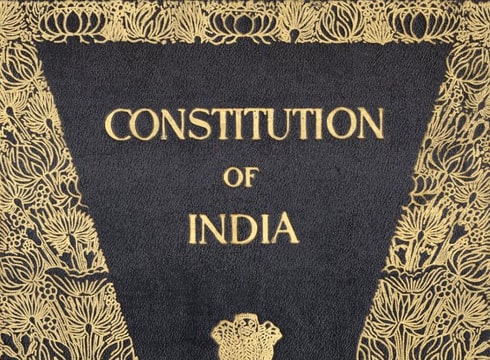
The conceptualization of the term ‘privacy’ can be traced back to ancient text of Hindus. If one takes a look at the Hitopadesh, it is stated that a few matters (like worship, sex, and family matters) should be protected from revelation. But in the Indian economy, for the first time, the concern of right to privacy was deliberated upon in debates of constituent assembly were K.S. Karimuddin moved an Amendment on the lines of the US Constitution, where B.R. Ambedkar gave it only reserved support; it did not ensure the incorporation of the right to privacy in our Constitution.
Right to Privacy is not definite in the Constitution of India; thus, it is a subject of judicial interpretation. The judicial interpretations of fundamental right get it within the range of fundamental rights. The journey of this project would begin from the search for the answer to the issue of whether the right to privacy is a fundamental right, by way of analysis of cases and some inventive work of scholars.
International Instruments
Article 17 of the International Covenant on Civil and Political Rights articulates and describes the right to privacy. It states that ‘No one shall be subjected to arbitrary or unlawful obstruction of his privacy, family, or correspondence, nor to unlawful strike on his honor or reputation’. Although Article 12 of the Universal Declaration of Human Rights 1948 states that ‘No one shall be subjected to arbitrary interference with his privacy, family, home or correspondence, nor to attacks upon his honor and reputation. Everybody has the right to the guardianship of the law against such impedance or attacks. Both of these instruments provide the right to privacy to the citizen as well as the states which are signatories to it, and are expected to fulfil these rights.
As India is a signatory to the International Covenant on Civil and Political Rights and the Universal Declaration of Human Rights, 1948, India has the constraint to implement these rights.
In the absence of enabling legislation, the ICCPR can have the legal force similar to other laws in India. And the UDHR is a mere declaration, and it does not have any legal force. But the courts have used the provisions of ICCPR as well as UDHR to make their argument substantial; and also in order to make the government realize about his responsibility not just towards the citizens but also towards international instruments.
Evolution of Right to Privacy
In M.P. Sharma v. Satish Chandra (hereinafter M.P. Sharma Case) were Supreme Court on the matter of ‘power of search as well as seizure’ held that they cannot bring privacy as a fundamental right, as it is something alien to the Indian Constitution and the Constitution makers did not bother about the right to privacy.
After the M.P. Sharma case, in the Kharak Singh Case Supreme Court on the matter of whether surveillance, defined under Regulation 236 of the U.P. Police Regulations is amount to breach of fundamental right and whether right privacy has come under the purview of fundamental right; they denied the right to privacy as a fundamental right and they deduced that “the right of privacy is not a pledged right under our Constitution and therefore the effort to determine the movements of an individual which is merely a manner in which privacy is invaded isn’t an infringement of a fundamental right guaranteed by Part III”
The next case was Govind v. State of MP, where the right to privacy was deliberated in detail. The issue was quite identical to Kharak Singh v. State of UP, but this time the approach of judgment was quite different. They maintained the effectiveness of Madhya Pradesh Police Regulations, 855 and 856, made under Section 46(2) (c) of the Police Act, 1961, within a reasonable limit. Judges were unable to decide whether the Right to Privacy is a fundamental right or not, and they passed on the burden to the next case by saying that “The right to privacy, in any case, surely has to go through a process of case-by-case development”. It is one good concept of law that could not be developed through a single case, as it is very difficult to see the exceptions and consequences of that concept of law through one case.
In Maneka Gandhi v Union of India, the Supreme Court elucidated Article 21 in a broad sense. They stated that both the rights of personal security as well as personal liberty acknowledged by what Blackstone termed ‘natural law’ are materialized in Article 21. Maneka Gandhi Case started the wide understanding of the Right to Life, which actually helped the Right to Privacy to fall within the scope of the Right to Life.
Rajagopal alias R. R. Gopal v. State of Tamil Nadu was the first case that made clear the progress and scope of the right to privacy in detail. To accomplish this task, the Supreme Court went through the entire jurisprudence of the right to privacy, its evolution and scope; and this filled the gaps of the Govind Case. In order to clarify evolution, it mainly discussed the Govind Case and followed almost the same strategy. This Court stated that the right to privacy is included without any question in the right to life and liberty guaranteed by Article 21. The conclusion was reached that the right to privacy no longer applies in the case of a matter of public record.